Pad Thai

What’s better than a delicious plate of Pad Thai, with its perfect combination of savory, sweet, and slightly tangy flavors? This dish, often hailed as Thailand’s street food staple, brings together chewy noodles, crisp vegetables, and protein-packed tofu in a harmony of taste and texture. The moment you take your first bite of this delightful Pad Thai, you’ll understand why it’s loved not only in Southeast Asia but also in homes around the globe.
Table of Contents
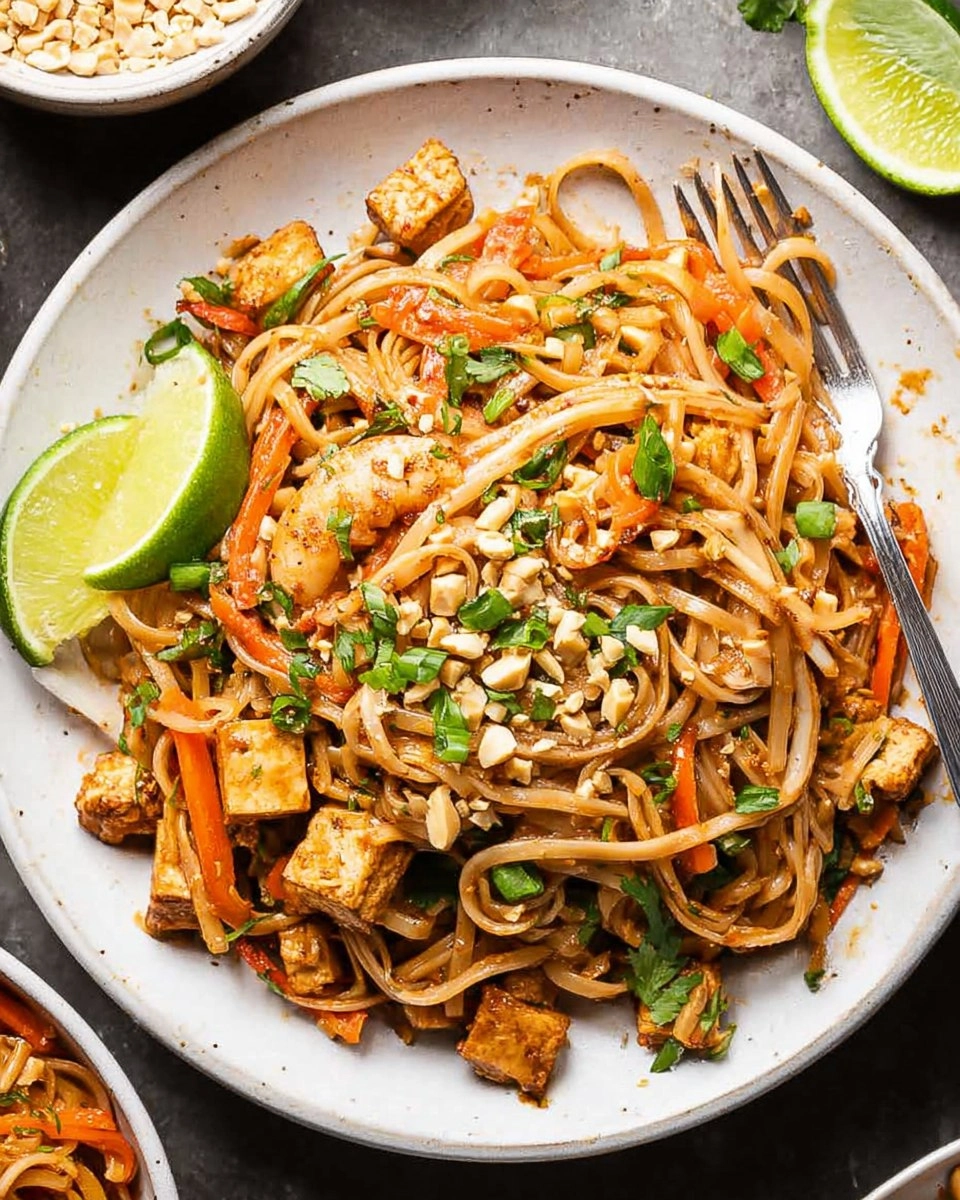
The beauty of making this Easy Pad Thai Recipe at home is that you can truly customize it to your liking. Every ingredient is thoughtfully selected to create a mouthwatering experience that beats takeout any day. Plus, it’s a budget-friendly meal that can feed a crowd, making it perfect for family dinners or gatherings with friends. I assure you, this recipe will quickly become your new go-to for impressing guests or satisfying those late-night cravings!
Why You’ll Love This Recipe
- Simple & Quick: This recipe is an easy weeknight dinner option that can be whipped up in just about 30 minutes!
- Irresistible Flavor: Expect a savory explosion with the blend of tamarind paste, peanuts, and fresh garlic, leaving your taste buds dancing.
- Eye-Catching Appeal: With colorful veggies and garnishes, this dish looks as good as it tastes.
- Flexible Serving: Whether it’s a hearty lunch, a cozy dinner, or a party treat, Pad Thai fits every occasion.
- Diet-Friendly Options: Easily adaptable for vegetarian and gluten-free diets with a few simple swaps.
Ingredients You’ll Need
- 2 tablespoons soy sauce: This forms the salty base of our sauce. Choose low-sodium if you’re watching your salt intake.
- 3 tablespoons water (or fish sauce): This adds depth to the sauce. Fish sauce enriches the taste but can be substituted with more soy sauce for a vegetarian version.
- 5 tablespoons light brown sugar: Brown sugar brings a touch of sweetness that balances the salty and tangy flavors perfectly.
- 2 tablespoons tamarind paste (or lime juice): Tamarind gives a distinct tanginess that is key to authentic Pad Thai. Lime juice is a good alternative if needed.
- 1 tablespoon lime juice: A little extra zing to brighten the flavors.
- 1 tablespoon chili sauce: For a kick of heat! Adjust according to your spice preference.
- 3 tablespoons peanut butter: Creaminess from peanut butter adds a delightful richness to the sauce.
- 8 ounces udon noodles (or pad thai noodles): Udon noodles are chewy and hearty, offering a lovely texture. Pad Thai noodles are more traditional but can be tricky to find.
- 14 ounces extra firm tofu (cut into ½” cubes): This is our main protein source. Feel free to substitute with shrimp or chicken if you prefer.
- 4 tablespoons peanut oil (divided): Peanut oil can withstand high heat and adds nutty flavors to the dish.
- ½ teaspoon garlic powder: This enhances the garlic flavor without the peeling and chopping.
- ¼ teaspoon fine sea salt: Just a pinch to elevate the overall flavor.
- ¼ teaspoon ground ginger: A subtle warmth complements the other ingredients beautifully.
- 1 tablespoon minced garlic: Fresh garlic adds an incredible aroma as it cooks.
- 1 cup carrots (julienned): These add crunch and sweetness, brightening the dish.
- ¼ cup green onions (finely sliced): These lend a fresh, sharp flavor.
- 2 eggs: Eggs are a classic addition to Pad Thai, adding richness and protein.
- 1 ½ cups bean sprouts (4.5 ounces): These crunchy sprouts add texture and freshness.
- ¼ cup peanuts (crushed): Chopped peanuts on top give a satisfying crunch.
- ¼ cup cilantro (chopped): Fresh cilantro brightens the dish, adding both flavor and color.
How to Make Pad Thai Recipe
Prepare the Noodles: Bring a large pot of water to a boil. Once boiling, add 8 ounces of udon noodles and cook according to package directions. Drain the noodles well, but remember, don’t rinse them!
Mix the Sauce: In a small bowl, whisk together 2 tablespoons soy sauce, 3 tablespoons water (or fish sauce), 5 tablespoons light brown sugar, 2 tablespoons tamarind paste (or lime juice), 1 tablespoon lime juice, 1 tablespoon chili sauce, and 3 tablespoons peanut butter. If the peanut butter is tough to blend, gently warm it until it’s smooth. Set this heavenly sauce aside.
Cook the Tofu: Heat 2 tablespoons of peanut oil in a wok or fry pan over high heat. Add 14 ounces of extra firm tofu and let it cook, stirring often, until it begins to brown nicely.
Season the Tofu: Evenly sprinkle ½ teaspoon garlic powder, ¼ teaspoon fine sea salt, and ¼ teaspoon ground ginger over the tofu. Stir it in to ensure it’s well distributed. Keep cooking until the tofu is lightly golden brown.
Add the Vegetables: Toss in 1 cup of carrots, ¼ cup of green onions, and 1 tablespoon of peanut oil. Stir and cook over medium-high heat until the carrots soften, stirring often so they cook evenly.
Scramble the Eggs: Once the carrots are cooked, turn the heat down to low and push the veggie and tofu mixture to the side of the pan. Pour in 2 beaten eggs into the empty space and scramble until they’re fully cooked.
Combine Everything: Add the cooked noodles, 1 ½ cups of bean sprouts, ¼ cup crushed peanuts, ¼ cup chopped cilantro, and the sauce you prepared earlier into the wok. Stir everything together to combine the flavors.
Cook Thoroughly: Increase the heat to medium-high and cook for another 5 minutes, stirring often to coat all the ingredients evenly with sauce. You’ll know it’s ready when the sauce begins to caramelize slightly and stick to the Pad Thai.
Serve Hot: Finally, plate your delicious Pad Thai and, if you like, sprinkle with extra crushed peanuts, chopped cilantro, and sliced green onions for that finishing touch!
Storing & Reheating
Leftover Pad Thai can be stored at room temperature for up to 2 hours before it needs to be refrigerated, where it can last for 3-4 days in an airtight container. To freeze, store it in freezer-safe bags or containers for up to 3 months. When you’re ready to enjoy, reheat it in a skillet over medium heat until it’s steaming hot, adding a splash of water or oil if it seems a bit dry. Note that the texture might shift slightly after freezing, but a dash of fresh lime juice should refresh it!
Chef’s Helpful Tips
- Avoid overcooking the tofu—aim for a golden brown on the outside to keep the inside creamy.
- Use fresh ingredients whenever possible; they dramatically enhance flavor and presentation.
- Don’t skimp on the garnishes! Fresh herbs and crushed peanuts will elevate your dish from good to great.
- Timing is key; keep an eye on the vegetables to ensure they stay crisp.
- Consider making the sauce ahead of time for even quicker assembly on busy nights.
This Easy Pad Thai Recipe not only meets your cravings with its tempting flavors but also makes everyday dinners feel special. Embrace the joy of cooking by experimenting with different proteins, vegetables, or spice levels to find your perfect version. I hope you enjoy every bite of this restaurant-quality dish at home!
Recipe FAQs
Can I make Pad Thai without tofu?
Absolutely! You can substitute tofu with chicken, shrimp, or even tempeh for a different twist. Just adjust the cooking times accordingly to ensure everything cooks through properly.
What noodles can I use for Pad Thai?
While traditional Pad Thai uses rice noodles, udon noodles work great in this recipe for a delightful chewiness. Feel free to get creative with whatever noodles you have on hand!
How can I make this dish gluten-free?
To make this dish gluten-free, simply use gluten-free soy sauce or tamari in place of regular soy sauce and ensure your noodles are gluten-free as well.
Can I prepare Pad Thai in advance?
Yes! You can prepare the sauce and pre-chop all your veggies ahead of time. On the day of serving, just cook and combine everything for a quick and delicious meal.
PrintMore Main Dishes Recipes
Did You Enjoy Making This Recipe? Please rate this recipe with ⭐⭐⭐⭐⭐ or leave a comment.
📖 Recipe Card
Pad Thai
- Prep Time: 20 minutes
- Cook Time: 20 minutes
- Total Time: 40 minutes
- Yield: 8 servings 1x
- Category: Main Dishes
- Method: Stir Fry
- Cuisine: Thai
Description
This Pad Thai recipe is a delightful combination of rich flavors and textures, bringing together tofu, fresh vegetables, and a savory sauce. It’s simple to make and ideal for a quick dinner or a comforting meal at home.
Ingredients
- 2 tablespoons soy sauce
- 3 tablespoons water
- 5 tablespoons light brown sugar
- 2 tablespoons tamarind paste
- 1 tablespoon lime juice
- 1 tablespoon chili sauce
- 3 tablespoons peanut butter
- 8 ounces udon noodles
- 14 ounces extra firm tofu
- 4 tablespoons peanut oil
- ½ teaspoon garlic powder
- ¼ teaspoon fine sea salt
- ¼ teaspoon ground ginger
- 1 tablespoon minced garlic
- 1 cup carrots
- ¼ cup green onions
- 2 eggs
- 1 ½ cups bean sprouts
- ¼ cup peanuts
- ¼ cup cilantro
Instructions
- Bring a large pot of water to a boil and add the noodles, cooking them according to the package directions.
- Drain the noodles, ensuring not to rinse them off.
- In a large skillet, heat 2 tablespoons of peanut oil over medium heat and add the tofu cubes, cooking until browned. Remove the tofu and set aside.
- In the same skillet, add the remaining peanut oil, garlic, ginger, and garlic powder; sauté until fragrant.
- Add the carrots and green onions, cooking briefly until tender.
- Fry the eggs, scrambling until fully cooked, then stir in the tofu and noodles.
- Combine the soy sauce, fish sauce, water, brown sugar, tamarind paste, chili sauce, and peanut butter to create the sauce, then pour it over the noodle mixture, tossing everything together until well-coated.
- Add in the bean sprouts, cilantro, and crushed peanuts right before serving.
Notes
For a more authentic taste, use pad thai noodles instead of udon noodles.
Feel free to customize the vegetables based on your preference or what you have on hand.
Add more chili sauce if you prefer a spicier dish.
Nutrition
- Serving Size: 1 Serving
- Calories: 350
- Sugar: 9g
- Sodium: 500mg
- Fat: 15g
- Saturated Fat: 2g
- Unsaturated Fat: 12g
- Trans Fat: 0g
- Carbohydrates: 45g
- Fiber: 4g
- Protein: 14g
- Cholesterol: 70mg